Environmental Threat in Zakarpattia: How Flooded Solotvyno Mines Pollute the Tisa River
The collapse of salt mines in Solotvyno causes approximately 11 tons of salt to leak into the Tisa River daily, threatening the ecosystem and local residents' safety.
 🇺🇦Ukraine
Photo: UNIAN
Key points
- 11 tons of salt enter the Tisa River daily from flooded mines.
- Over 130 houses are condemned due to ground subsidence in Solotvyno.
- The crisis stems from the 1967 liquidation of drainage systems for 'efficiency'.
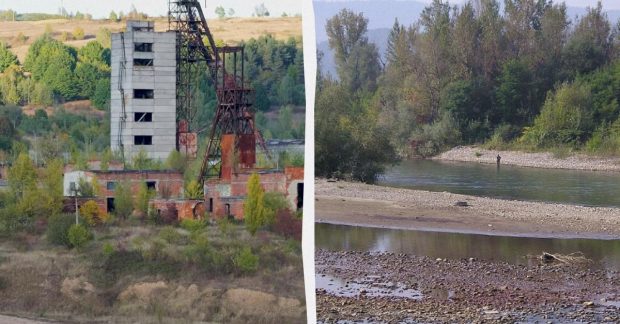
The situation surrounding the salt mines in the village of Solotvyno, Zakarpattia, is evolving into a long-term environmental crisis. According to recent studies, the flooding and gradual destruction of former mines result in about 11 tons of rock salt leaching into the Tisa River every day. Soil degradation processes have caused the ground in certain areas of the settlement to sink by several centimeters annually, with over 130 residential buildings already officially declared unfit for habitation.
Causes of Decline: From Soviet 'Rationalization' to Systemic Errors
While salt mining in the region dates back to Roman times, critical issues emerged during the Soviet era. Experts attribute the current state of the mines to management errors and the excessive use of explosives, which created cracks in the salt massifs. Karoy Takar, a former employee of the water drainage department, recalls that in the 1960s, critical freshwater drainage systems were liquidated to save costs and earn state awards.
"Five or six years passed, and the first drops of water appeared. Once fresh water hits the salt, this process can no longer be stopped,"the veteran miner explains.
Janos Kocherha, deputy head of the Solotvyno community, emphasizes that the local hydrogeology is extremely complex, as the Tisa River curves around the village. The neglect of drainage systems led to the irreversible dissolution of salt deposits by groundwater. Attempts to pump out the water ceased due to exorbitant electricity bills, effectively ending the industrial history of the site.
Environmental Consequences and Future Risks
Today, massive craters filled with brine have formed at the sites of nine former mines. The last two operational mines finally collapsed between 2008 and 2010, after which the situation was declared a state-level emergency. Although the current salt concentration in the Tisa is not yet critical for flora and fauna, the rising trend worries environmentalists. Increased chloride levels could negatively impact the quality of agricultural land in the river's floodplains.
Hydrogeologist Antal Sherfeze warns that the situation remains unstable. Any significant shift in underground layers could lead to a sudden displacement of large volumes of salt water to the surface or directly into the Tisa's riverbed. Additional pressure on the ecosystem comes from the local tourism business, which discharges used salt water from pools into the general network.
Source UNIAN — unian.ua/ecology/solotvinska-solyana-shahta-chomu-v-tisu-shchodnya-… ↗
Read next
 🚨Events
Air Assault Forces Deny Reports of New Border Breakthrough in Kursk Region
The Command of the Air Assault Forces has officially denied social media rumors regarding an alleged new breakthrough by Ukrainian forces and the capture of a settlement …
 🏛️Politics
Debate over NABU's methods: SAP prosecutor highlights the agency's media team
SAP prosecutor Rostyslav Batih addressed criticism regarding the substitution of evidence with media campaigns, praising the professionalism of NABU's video editors.
 ⚽Sport
ATP Finals Review: Carlos Alcaraz Dominance and the Next Generation Outlook
Sports commentators summarize the end-of-season ATP tournament, highlighting the triumph of Spanish tennis player Carlos Alcaraz and the success of young athletes.
 🩺Health
Scientists Identify Two Age Milestones When Human Immunity Ages the Fastest
A new study reveals that the human immune system does not age gradually, highlighting two sharp decline periods around age 40 and after 60.
 🧠AI Analysis
Artificial Intelligence on the Battlefield: How Ukrainian Ground Robots Move Toward Autonomy
Ukrainian developers of ground robotic systems are actively implementing artificial intelligence elements to minimize dependence on operators and communication.
 🎭Culture & Sport
Historical Field Discovery: How a Random Find Revealed Secrets of King Alfred
Archaeological mysteries sometimes emerge from routine fieldwork, such as the discovery of a medieval English monarch's jewel during plowing.