Military Justice in Ukraine: Why Experts Warn Against Recreating Military Courts
An analysis by the «Pryncyp» human rights center reveals why bringing back military courts and prosecutor offices will not solve systemic issues for service members, but rather create new risks for justice.
 👥Society
Photo: Ukrainska Pravda
Key points
- The «Pryncyp» center opposed the reinstatement of military courts.
- Concerns exist regarding the chain of command influencing military-ranked judges.
- Experts advocate for civil judge specialization instead of a new separate system.
- The issue of military justice is currently evaluated by parliament.
Discussions on restoring the military justice system in Ukraine continue amid the full-scale war, drawing attention from lawmakers and the public alike. A Temporary Special Commission of the Verkhovna Rada is actively working on this issue with input from leading human rights organizations, including the «Pryncyp» center. The main argument of proponents is that military personnel cases should be handled by individuals with actual frontline experience.
Risks of Subordination and Command Influence
The primary warning against establishing military courts is the threat to judicial independence. Military service is built on strict subordination and single-command principles, whereas the judiciary requires absolute impartiality. If judges are granted military ranks, questions arise regarding promotions through the Ministry of Defense or the General Staff, opening pathways for administrative pressure.
Human rights defenders point to previous legislative initiatives aimed at increasing accountability for subordinates regarding military offenses without equivalent oversight for commanders. Under such conditions, a service member risks facing a scenario where judgments are influenced by the chain of command rather than the law itself.
Specialization Instead of a Parallel Vertical
Experts argue that the civil judiciary has accumulated substantial expertise in handling military-related cases over the years of war. Instead of the risky creation of a parallel judicial vertical, it is more prudent to introduce narrow specialization among current judges for military offenses. This approach guarantees proper protection of service members' rights without jeopardizing institutional independence.
Source Ukrainska Pravda — pravda.com.ua/news/2026/11/20/8063800/ ↗
Read next
 🎭Culture & Sport
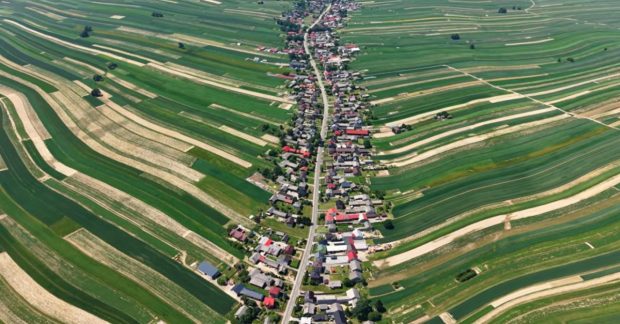
Unique Polish Village of Suloszowa Amazes with a Single 9-Kilometer-Long Street
A small settlement in Poland has preserved its medieval street-village layout, featuring houses lined up along a single road and fields forming a picturesque mosaic.
 🎓Education
Odesa Schools Switch to Remote Learning Due to Utility Disruptions
Educational institutions in Odesa are temporarily shifting formats amid significant power, heat, and water supply issues.
 🇺🇦Ukraine
Strike on Dymer and Massive Shelling Across Regions: People Trapped Under Rubble
A Russian drone strike partially destroyed an apartment building in the Kyiv region, with people potentially trapped under the rubble. The President of Ukraine reported o…
 🏙️City
Utility providers step up pressure on debtors: water cutoffs announced in neighboring community
Dnipro and Novoleksandrivka utility workers will disconnect water supplies to private sector debtors between November 23 and 27.
 🏙️City
The Philosophy of Reconstruction: Why Everyday Repairs Are Becoming the Foundation of Survival for Frontline Cities
Reflections on how the routine labor of utility workers and engineers in frontline regions shapes a new reality, where infrastructure restoration is the primary condition…
 🎓Education
Elina Svitolina and Marta Kostyuk Nominated for Prestigious WTA Awards for the 2026 Season
Leading Ukrainian tennis players Elina Svitolina and Marta Kostyuk have been nominated for the Women's Tennis Association annual awards following a successful sports seas…